

Testing XSL
file://e:\websites\public\12571880\12571880_OttawaPoliceService\en\rotatingimages\rotatingImageData.xml
defaultInterior


A Fingerprint in the Spotlight: Kristin Russell’s Photography Feature
 Back to Search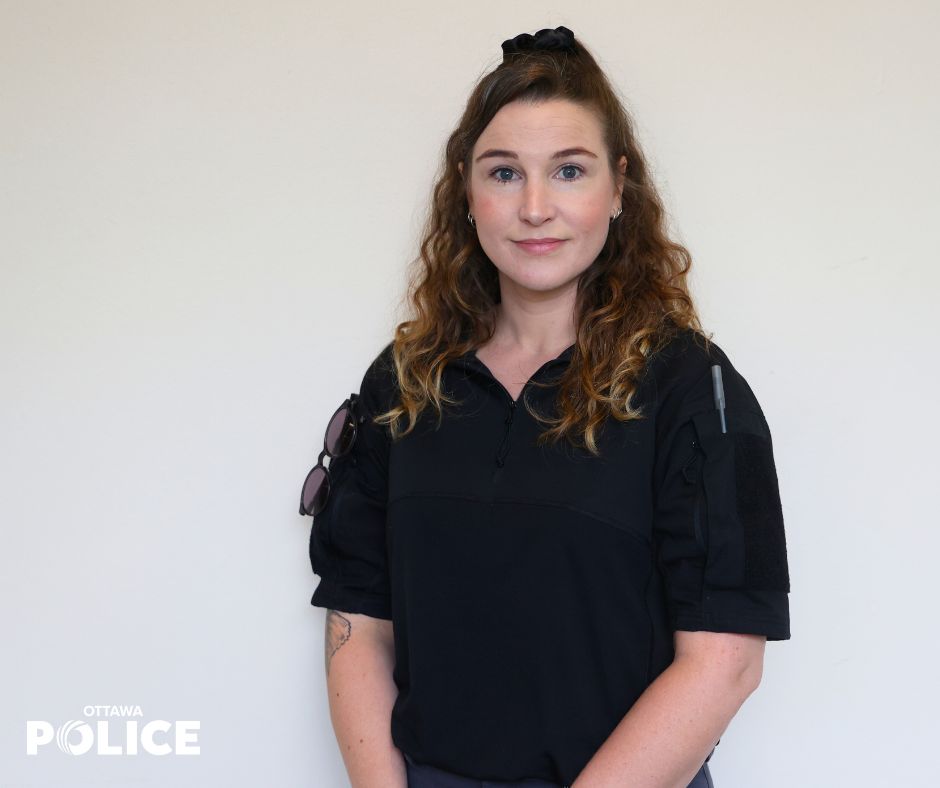
In a quiet lab tucked behind the scenes at the Ottawa Police Service (OPS), Kristin Russell spends her days managing the forensic identification laboratory with the precision and care of a scientist — because that’s exactly what she is.
“I come from South Africa,” she said. “Where I was a forensic analyst for the National Police Force’s forensic division."
Now a forensic technician and laboratory manager, Russell ensures procedural compliance so that every fingerprint and piece of evidence is handled with scientific integrity and legal defensibility. She’s part of a unit that works 24/7 on everything from break-and-enters to homicides, all in pursuit of truth etched in the tiniest details — often in the ridges and patterns of a fingerprint.
But one day, in the midst of a training course, Kristin took a photo that would briefly shine a spotlight on the quiet mastery behind her work.
During a chemical processing week at the Canadian Police College, Russell was asked to process a crumbled piece of aluminum foil — a difficult surface for fingerprint recovery. She smoothed it out with the back of a spoon before processing it. “I couldn’t believe the fingerprints weren’t destroyed,” she recalled. “Even for me, after 15 years in forensics, it was honestly mind-blowing.”
The technique involved super glue fuming — heating cyanoacrylate to create vapors that cling to fingerprint residues — followed by a fluorescent dye stain. She photographed the developed print under alternate light sources using a fixed camera rig. The result? A startlingly detailed image capturing what forensic techs call “level three” fingerprint detail.
The Ottawa Police Service's laboratory is equipped with Foster + Freeman's equipment so when Russell came across theUK-based forensic technology company's annual international Forensic Photographer competition, she thought, “Why not?”.
She submitted her image — not a case photo, but one from training — and to her surprise, the company not only featured it in their newsletter before the competition closed but selected it for their forensic calendar. Her fingerprint image was used to promote their fuming technology. Another image she submitted — a UV-enhanced photo revealing a hidden phone number on a mannequin at a mock sexual assault scene — was also selected, featured in April to promote alternate light source techniques.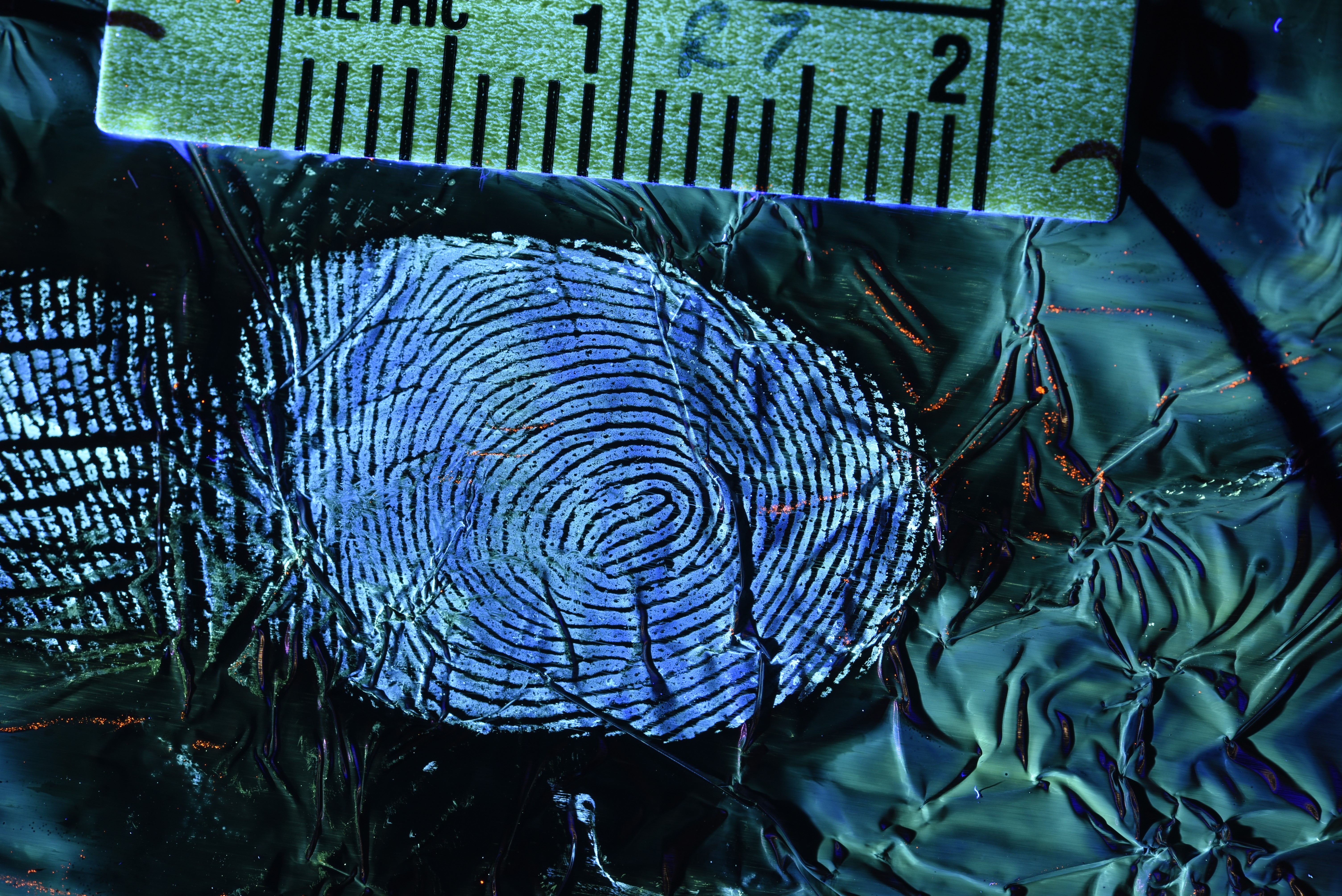
Though she didn’t win the competition outright, Russell became the only person that year to have two featured images. “To have Ottawa Police represented not once, but twice in an international forensic calendar — that’s pretty special,” she said.
Her role may be behind the scenes, but Russell’s passion and scientific rigor are helping elevate forensic work in Ottawa. She’s part of a new wave in the forensic identification unit, which has grown significantly thanks to initiatives like Project Complement. Now, with a mix of sworn officers, special constables, and civilians with science degrees like hers, the unit is pushing toward a future where forensic evidence isn’t just powerful — it’s rock-solid and scientifically unimpeachable.
And sometimes, even beautiful.
Kristin’s fingerprint image — captured on a crumpled piece of foil, born from curiosity and lit by scientific precision — now hangs on walls around the world, a quiet tribute to the artistry and accuracy that define modern forensic science.