

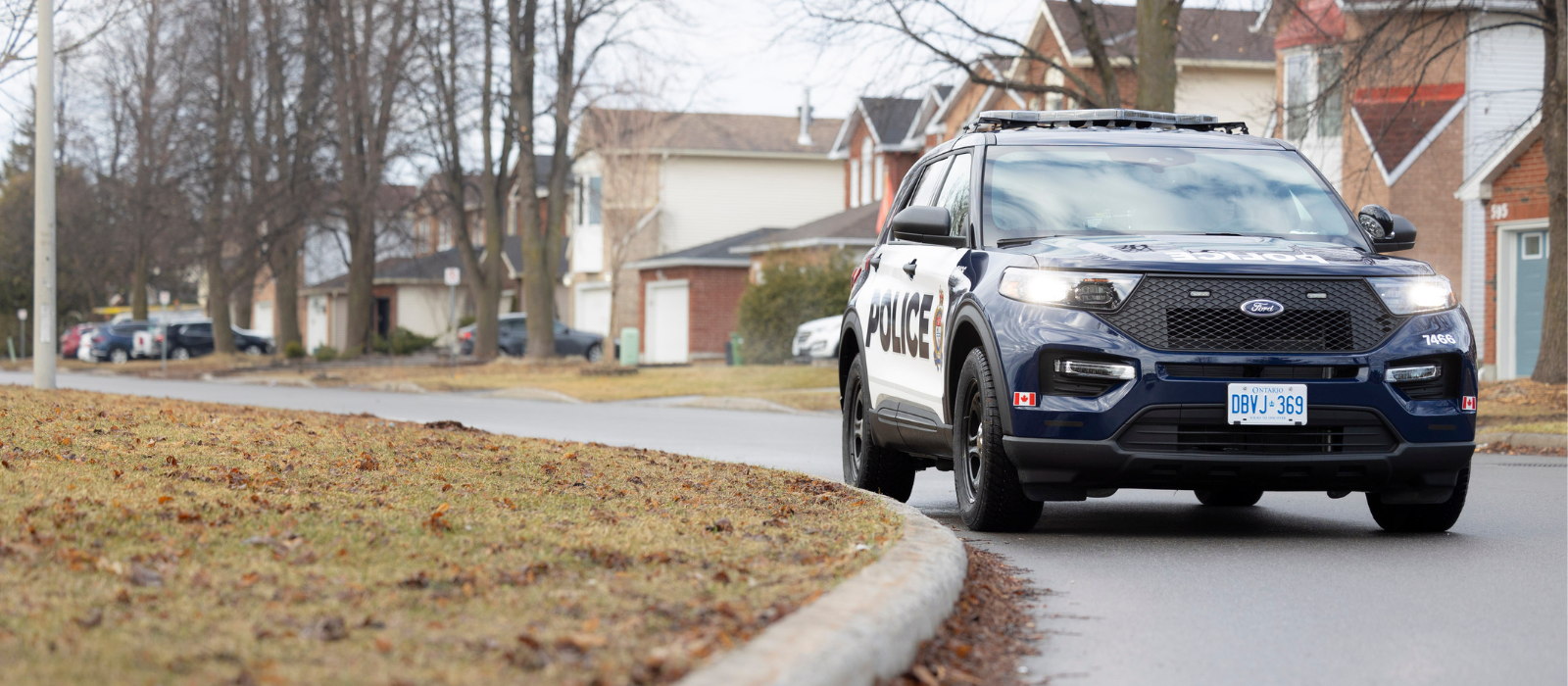


District Policing
District policing is how the Ottawa Police Service is changing the way policing is delivered to better meet the evolving safety needs of Ottawa’s communities.
What does this mean for you? Neighbourhoods will have more visible, responsive, and locally informed policing service.
Ottawa’s communities are diverse, spanning urban, suburban, and rural areas, and safety concerns can vary significantly from one neighbourhood to the next. District policing will respond to those differences.
This model represents a strategic shift toward community-centred, evidence-based policing, grounded in Community Safety and Well-Being principles. It strengthens local accountability, supports collaboration with community partners, and enables services to be tailored to the unique needs of each district.
The following video outlines how the Ottawa Police Service is developing a renewed approach to community policing:
What we heard
Between January and March 2026, the Ottawa Police Service convened eight engagement sessions to inform the implementation of its Community Policing approach, the Community Safety and Well-Being (CSWB) Framework, and the new District Model.
This report synthesizes what was heard at the community level, in the 6 District sessions plus the rural engagement representing multiple districts.
Click the following link to view the report:
You Said, We Heard - 2026 Strategic Synthesis Report
What residents can expect
Through District policing, residents can expect:
- More visible police presence in neighbourhoods
- Faster responses to local concerns
- Policing priorities shaped by neighbourhood data and community input
- Stronger relationships between police and the communities they serve
- Better coordination between police, City Councillors, and community partners
Why this change matters
District policing shifts the OPS from a largely centralized approach to one that emphasizes local ownership, accountability, and flexibility.
This change allows the OPS to:
- Empower district-level leadership with greater decision-making authority
- Improve accountability at the neighbourhood level
- Deliver policing that reflects local needs and conditions
- Strengthen partnerships with residents, businesses, and community organizations
- Integrate Community Safety and Well-Being principles into everyday policing
The four-District model is central to ensuring OPS is positioned to meet both current and future public safety needs across the city.
How the District Model works
Each District is led by a Superintendent and supported by two Inspectors—one overseeing the Neighbourhood Branch and one responsible for Frontline patrol operations. Together, they lead an integrated district team that brings neighbourhood, frontline, and specialized resources together.
Frontline officers continue to answer emergency calls and patrol neighbourhoods, while also spending more time learning about the areas they serve. This helps officers identify ongoing concerns and focus their time on the issues that have the greatest impact locally.
Integrated Neighbourhood Team roles
Community Intake Relationship Specialists (CIRS)
CIRS are trusted points of contact within the community. They work proactively with residents, community groups, and partner agencies to identify concerns early, connect people to appropriate services, and ensure community input helps shape district priorities.
Crime and Research Analysts
Crime and Research Analysts analyze crime trends and emerging issues to support evidence-based decision-making and guide district priorities and enforcement strategies.
Community Police Officers (CPOs)
CPOs build long-term relationships with residents, businesses, and community partners. Through regular engagement, they identify emerging issues early and work with Neighbourhood Resource Teams to address concerns in a focused and coordinated way.
Youth Officers
Youth Officers work with schools, youth-serving organizations, and community partners to support mentorship, prevention, and early-intervention initiatives that promote positive outcomes for young people.
Neighbourhood Resource Teams (NRTs)
NRTs provide flexible, high-visibility responses to ongoing or emerging neighbourhood issues. Their work combines targeted enforcement with problem-solving in collaboration with the community.
Traffic Safety as a District Priority
Traffic safety is one of the most common concerns raised by Ottawa residents.
District policing addresses these concerns through District Traffic Units, supported by a centralized Road Safety Unit.
This approach allows traffic enforcement and education efforts are both locally responsive and coordinated city-wide.
District Traffic Units
District Traffic Units are assigned to specific geographic areas and focus on neighbourhood-identified road safety concerns, including:
- Targeted enforcement of speeding, stunt driving, impaired driving, and driving while prohibited
- High-visibility patrols in residential areas, school zones, and high-collision locations
- RIDE programs and traffic safety blitzes
- Responding to community traffic complaints and local concerns
- Working with residents, schools, and community groups to identify enforcement priorities
Because these officers are district-based, they are able to respond more quickly and focus efforts where they are most needed.
Road Safety Unit
The Road Safety Unit provides specialized, city-wide expertise and operational support, including:
- Coordinated traffic safety initiatives and enforcement campaigns
- Advanced enforcement techniques and specialized training
- Commercial motor vehicle inspections and motorcycle operations
- Automated Licence Plate Recognition (ALPR) support
- Data-driven deployment based on collision trends and risk factors
This unit complements district-level efforts while maintaining a broader city-wide perspective.
Report traffic concerns
Residents can report traffic concerns online.
Information provided by the community helps guide enforcement efforts and determine where traffic resources are deployed.
Stay informed
As District policing continues to roll out, updates will be posted to this page.
Questions?
Email: [email protected]