

Testing XSL
file://e:\websites\public\12571880\12571880_OttawaPoliceService\en\rotatingimages\rotatingImageData.xml
defaultInterior
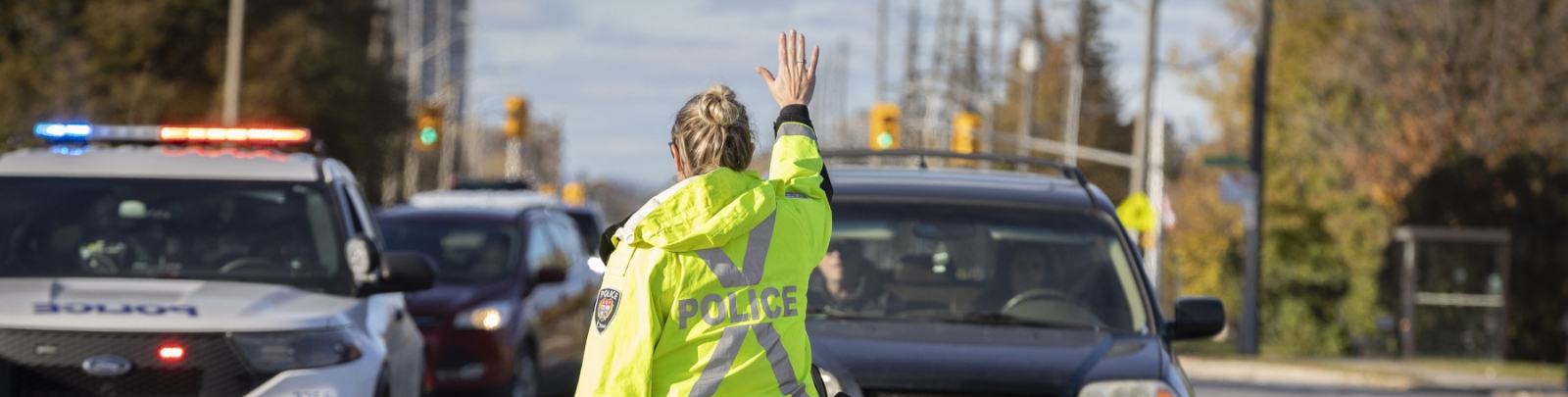


Release of 10-Year Traffic Stop Race Data Collection Report & Response
 Back to Search
FOR IMMEDIATE RELEASE: Tuesday, June 18, 2024 1:16 pm
(Ottawa) – The 10-Year Traffic Stop Race Data Collection Program (TSRDCP) Report prepared by the York/Ontario Tech Research Team is now available on the Agenda of the Ottawa Police Service Board’s (OPSB) meeting on June 24th, 2024.
As the researchers point out in their report, “OPS is doing a lot of groundbreaking leadership work on its journey toward professional and equitable policing in partnership with the communities it serves. The Community Equity Council has been an important part of this journey, bringing foundational changes and improvements to policing. The service is well-positioned more than ever to leverage these strengths and continue the human rights work to address the findings of this 10-Year TSRDCP Report,” said Dr. Les Jacobs and Dr. Lorne Foster.
OPS will work closely with the Community Equity Council to launch an 18-month TSRDCP Task Force and Action plan to address the disproportionalities. The Task Force will review traffic stop deployment, policy, procedures, and training, as well as the work already underway in the OPS DRIVE2 Strategy.
Community Equity Council Co-Chair Sahada Alolo said, ‘The findings are discouraging and may erode trust in the community. Nonetheless, we are on a journey of change. We will continue working with police and community leaders to address these disproportionalities by developing concrete actions that enhance community safety and build trust.”
Highlights of the Researchers’ Report:
- Young male drivers aged 16-24 have experienced the highest levels of disproportionality, although there have been significant reductions in these disproportionalities since 2013.
- Drivers perceived to be Middle Eastern and Black in this age category are being stopped significantly less than they were ten years ago, but they are still being stopped more than would be expected based on corresponding city population data.
- The racial disproportionalities have increased over the ten-year period for drivers perceived to be Black and Middle Eastern aged 25-54.
- Traffic stops of female drivers perceived to be Black or Middle Eastern in the 16-24 and 25-54 categories have almost completely disappeared in recent years.
- For the “Outcome of traffic stops”, drivers perceived to be White are the most likely to be charged, and drivers perceived to be Black are the least likely to be charged.
- The ‘Reasons for Stop’ data shows that over 96% of traffic stops are for provincial offences and that, therefore, a very small number of traffic stop instances remain for criminal offences and suspicious activity. Drivers perceived to be Black or Middle Eastern are more likely to be stopped for reasons of suspicious activity and criminal offences, which may reflect racial bias.
“I want to thank Dr. Lorne Foster and Dr. Les Jacobs, as well as the Community Equity Council and partners for their important contributions to this ongoing human rights work,” said Chief Eric Stubbs. “This study continues to be groundbreaking and important to our service and our community. We are committed to pressing ahead and addressing inequities. We will work with the task force on a number of change initiatives including reviewing our deployment, piloting body worn camera technology and continuing to use data to help identify and address issues.”
Race and identity-based data collection is a recognized human rights tool for identifying, monitoring, and addressing systemic issues. OPS has been collecting race-based data for traffic stops for over ten years, making it the largest race-based collection effort in Canadian policing.
Five data fields are collected by officers for each traffic stop – namely, the perceived race of the driver, the gender of the driver, the age of the driver, the reason for the stop, and the outcome of the stop. Officers also record if they knew the driver's race before their decision to stop the vehicle.
As experienced by community leaders on ride-alongs, officers usually cannot see the driver's race before the decision to stop the vehicle for most traffic stops due to several factors, including time of day, weather, tinted windows, and distance. The data analysis by researchers is limited to drivers residing in the City of Ottawa, where all five data fields mentioned above were completed.
On June 24th, OPS will be introducing a new geospatial mapping tool that complements the 10-Year TSRDCP Report. This will include additional data fields to allow for greater analysis of the data at the neighbourhood level.
-30-
Through the Community Safety Data portal data.ottawapolice.ca, members of the public can view, download, and interact with data released by the Ottawa Police Service.
CONTACT:
Media Relations Office
Tel: 613-236-1222, ext. 5366