

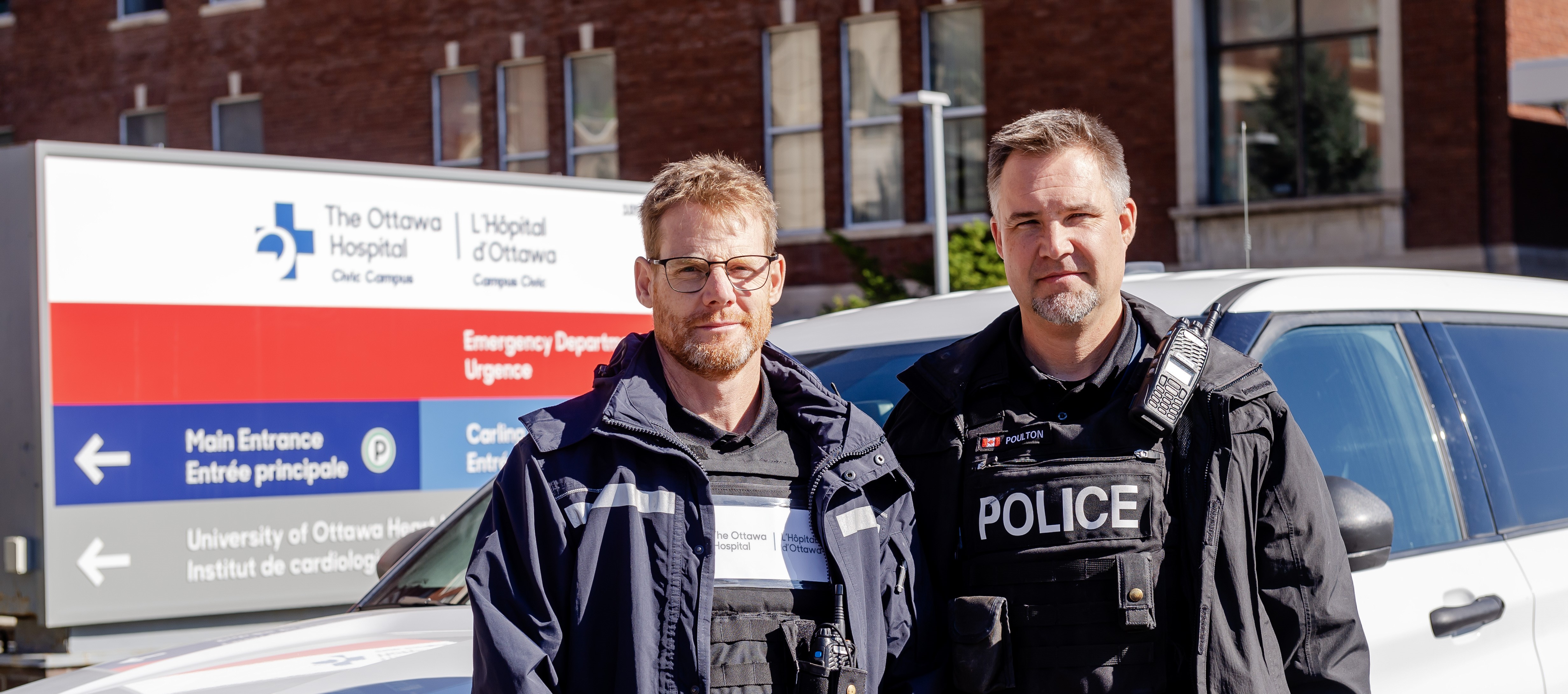


Crisis Intervention Team (CIT) Program
In 2025, the Ottawa Police Service (OPS) launched a Crisis Intervention Team (CIT) Program, an internationally recognized approach that has been operating across North America since the 1980s.
In Ottawa, Mental health calls for service have increased by 15% since 2019, while occurrences with a mental health component have increased by 30% over the same period.
The intent of CIT training is to:
- Enhance de-escalation skills and equip officers with a deeper understanding of mental health legislation;
- Provide tools for effective systems navigation and community resource engagement;
- Emphasize culturally sensitive and trauma-informed approaches to better serve individuals in crisis.
The CIT Program ensures that there is one CIT trained officer on each frontline platoon, as well as several additional officers to address the higher number of mental health calls for service. This effectively provides 24/7 coverage across the city.
These officers are a diverse group that, amongst them, speak English, French, Tagalog, Urdu, Somali, Korean, Twi, Creole, Farsi, Czech, and Italian. Many have experience in the community working and/or volunteering in areas such as homelessness, suicide interventions, youth, community health, safer injection sites, and correctional facilities.
The Philosophy
The CIT philosophy involves bringing together subject matter experts on mental health response from law enforcement, medical and crisis professionals, and community members or groups with lived experience to collaborate on programming and support community mental health responses. The OPS Mental Health Unit (MHU) has been working with this general philosophy since its inception over 20 years ago.
The Training
OPS CIT instructors spent three months working with community and mental health service partners to create training and scenarios that are relevant for our local communities. The training included modules covering various elements of mental health crisis, the spectrum of mental wellness and major mental illness, cultural impacts and sensitivity, intergenerational and community trauma, mental health terminology, mental health legislation, recovery care and addiction response, suicide intervention overview, and trauma-informed approaches. Participants will also engage in facility visits to learn firsthand about the treatment system, community resources and alternative supports.
While initial training is forty hours, this program includes ongoing training and skills development, data collection, and situation debriefs to support continuous learning, improvement, personal well-being, and inform evaluations and reporting.
Since the CIT Officers completed their training a month ago, they have shared that they are consistently applying their Crisis Intervention Team (CIT) training, not only during mental health-related calls, but also in a wide range of everyday situations.
"Multiple CIT Officers have expressed that the training has increased their confidence in engaging with individuals experiencing mental health and/or substance use crises," says Staff Sergeant Ali Toghrol. "The communication and de-escalation skills developed through their training have made a clear and noticeable impact in the field. Officers continue to share encouraging experiences where they’ve successfully slowed down situations, used effective de-escalation techniques, and built meaningful rapport with community members."
CIT officers have also been actively assisting the Mental Health Unit on calls, where their involvement has consistently contributed to positive outcomes.
The OPS has multiple valued community partners we would like to acknowledge and thank who have contributed to the program. While not all would like to be publicly acknowledged for their contributions, we can relay that some of our partners include: Centretown Community Health Centre and Community Navigation of Eastern Ontario/211 East Ontario, The Ottawa Hospital’s Mobile Crisis Response Team, the Royal Ottawa Mental Health Centre, Youth Services Bureau of Ottawa, Recovery Care, the Ottawa Paramedic Service Mental Well-Being Response Team, Psychiatric Survivors of Ottawa, Rideauwood Addiction and Family Services, and The Children’s Aid Society of Ottawa
The OPS would also like to thank the Ministry of the Solicitor General who has supported and funded this program.
Mental Health Data
Some Canadian mental health statistics (from CAMH and CMHA):
-
1 in 5 Canadians experiences a mental illness in any given year.
-
10 million Canadians report their mental health as “poor” or “fair,” three times more than before the pandemic.
-
4,000 Canadians per year die by suicide – an average of almost 11 suicides a day. It affects people of all ages and backgrounds.
-
People with a mental illness are twice as likely to have a substance use disorder compared to the general population. One in two individuals with schizophrenia may be living with a substance use disorder.