
Ottawa Police learn brain science to help in toxic drug crisis
FOR IMMEDIATE RELEASE: Thursday, April 23, 2026 11:20 a.m.
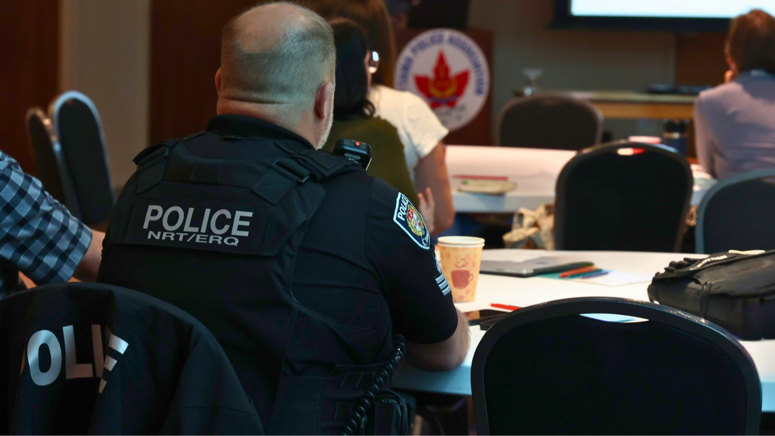
(Ottawa) – The Ottawa Police Service (OPS) members are learning about brain science and how it contributes to a person’s resilience against substance use disorders in a workshop on Thursday, April 23, 2026. The event is hosted in partnership with the Canadian Centre on Substance Use and Addiction (CCSA), the Alberta Family Wellness Initiative and the Palix Foundation.
Along with other partners, CCSA and OPS are working together to strengthen the City of Ottawa's readiness and responsiveness to the evolving toxic drug crisis. The Brain Story, taught by Alberta Family Wellness Initiative and the Palix Foundation, explains how experiences during sensitive periods of development can shape the brain in ways that either increase or reduce the risk of future physical and mental health issues, including addiction.
“Every day, our members see the human impact of the toxic drug crisis across this city,” said Chief Eric Stubbs of the Ottawa Police Service. “If we want to respond better, we need to better understand what drives substance use, including the effects of trauma and brain development. This training gives our officers practical knowledge to engage people more effectively, reduce stigma, and help connect them to the right supports.”
“We have the expertise in substance use health, but the Ottawa Police see the drug crisis up close every day,” says Karen Cumberland, CCSA’s Vice President of Strategic Initiatives & Community Outreach.
“How a person engages with law enforcement can sometimes be stigmatizing or traumatizing. This training will give officers a better understanding of how people get to where they are, and gives them a common language. More supportive interactions can build greater trust and opportunities for officers to direct people with substance use challenges towards the services and supports they need.”
The workshop translates complex scientific research into accessible concepts and practical applications. It also supports participants in integrating concepts into practice, and could result in better interactions and health outcomes for people who use drugs.
“The Palix Foundation is excited to be working with law enforcement to share the science of brain development and how our experiences shape lifelong physical and mental health. We recognize that police often encounter individuals at critical moments and play a vital role in safety and well-being,” says Dr. Victoria Meah, Scientific Director of the Palix Foundation.
“Building a common language and common understanding of this science can support more informed responses and strengthen connections to services, contributing to healthier, more resilient communities.”
Ottawa has a higher rate of deaths due to opioids contaminated by other substances than the provincial average, at 10.9 compared to 9.4 for every 100,000 people. CCSA is also working with the City of Ottawa and Ottawa Public Health to develop an Ottawa-specific response to the local drug situation.
– 30 –
Through the Community Safety Data portal data.ottawapolice.ca, members of the public can view, download, and interact with data released by the Ottawa Police Service.
Help make your community safer: register your information and security camera location at CAMSafe.ca to support investigations.
About the Ottawa Police Service
CONTACT:
Ottawa Police Service Media Relations
Tel: 613-236-1222, ext. 5366
Connect with us through Facebook, Bluesky, X and Instagram.
Christine LeBlanc, Senior Strategic Communications Advisor
Canadian Centre on Substance Use and Addiction
613-898-6343 | cleblanc@ccsa.ca


